Five Questions with David Monks, Vice Provost for Outreach and Engagement
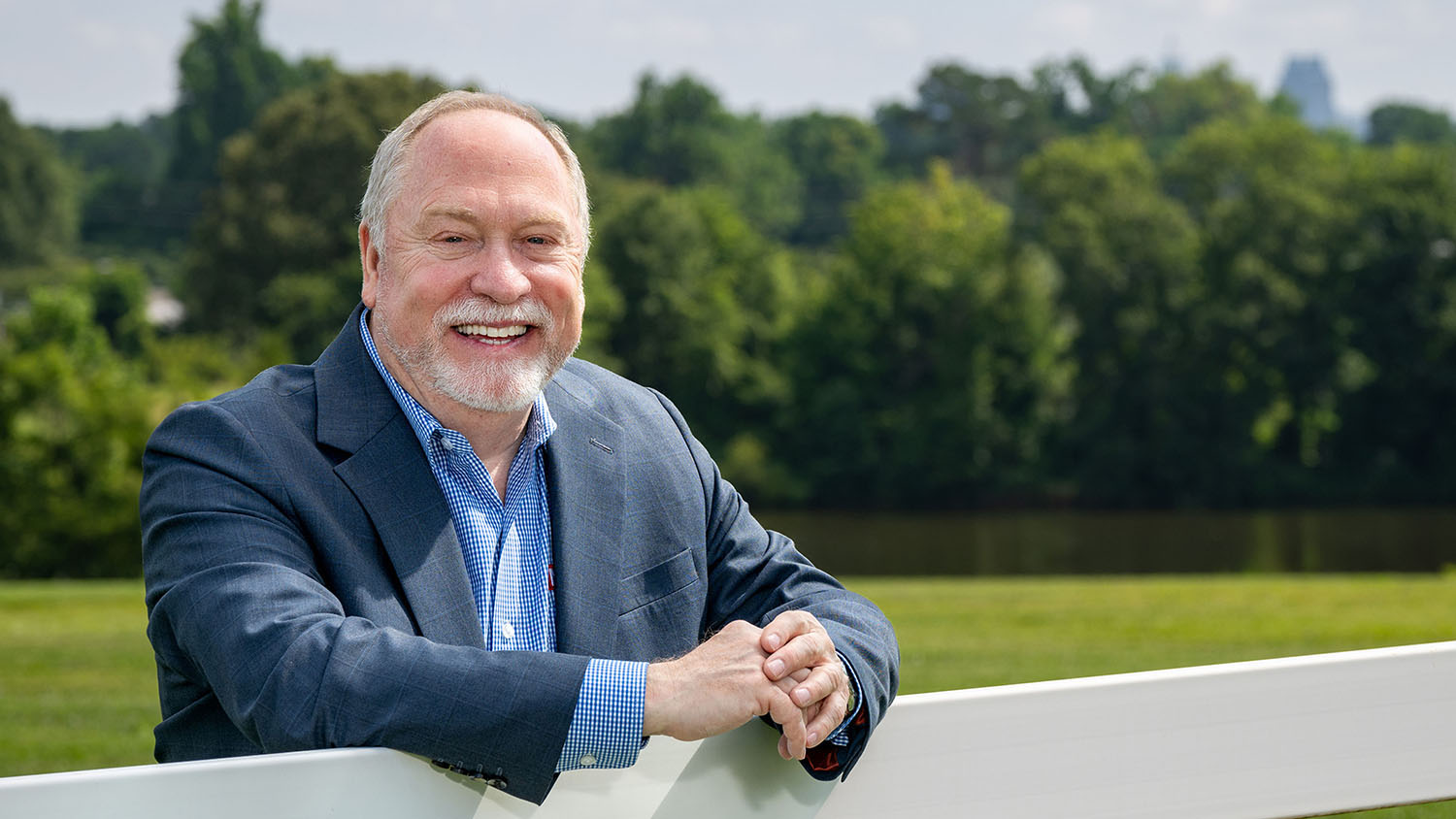
We recently spoke with David Monks, vice provost for Outreach and Engagement and associate dean and director of NC State Extension in the College of Agriculture and Life Sciences, about Outreach & Engagement, its service to the campus and North Carolina community, and what’s next.
How does Outreach and Engagement support local and global communities through education and research missions?
Land-grant universities like NC State serve the public good. We do this by developing and nurturing partnerships throughout our state and our country. Our faculty engage with communities by building meaningful relationships with a wide range of partners, including nonprofits, government agencies, businesses and various community groups to tackle real-world challenges.
Through these collaborations, we extend the university’s resources, share our expertise and apply research outcomes. This kind of work is happening all over campus, so Outreach and Engagement acts as a university-wide umbrella office, looking for ways we can coordinate efforts and scale up the societal impact of research and education. We connect the connectors.
What are some of the most important ways Outreach and Engagement interacts with faculty members at NC State?
We interact with faculty in many ways, including the following:
- Professional development: We are stewards of several institutional memberships that provide professional development and networking opportunities on a wide range of topics. We are planning a focused newsletter on this topic, so please subscribe to our newsletter!
- Recognition and support: Our office stewards a number of service awards that recognize outstanding extension and engagement accomplishments. Nominations are now open for the Governor James E. Holshouser, Jr. Award for Excellence in Public Service. We hope to bring back seed funding for faculty projects this school year.
- Partnership building: Outreach and Engagement supports faculty in developing local, state and global partnerships that align with their research and teaching goals.
- Resource Hub: We provide tools, best practices and data on community engagement to strengthen faculty projects.
- Connecting in North Carolina (CINC) Tour: For new faculty especially, it can be difficult to understand what “the land-grant mission” is. The CINC Tour is where the rubber hits the road: we take a bus full of new faculty and staff to meet some of the partners we have in a geographic region of the state.
What are some recent examples of service where the office has worked to solve statewide issues and improve the lives of North Carolinians?
Last year, we used our connecting role on campus to help Western North Carolina recover after Hurricane Helene. We led two major efforts:
- Lunch, Learn and Engage Series: In collaboration with the Engagement Operations Council, we launched a webinar series and focused it on Hurricane Helene. The sessions brought together dozens from the campus community to learn about recovery efforts and discuss long-term, collaborative approaches to community needs.
- CINC Tour: In June 2025, the CINC Tour travelled to Western North Carolina, where our colleagues, collaborators and loved ones are still processing how Hurricane Helene has changed their lives. We had face-to-face conversations and toured facilities like the Asheville Museum of Science, the Mountain Horticultural Crops Research and Extension Center, The Industrial Commons and the Madison County Extension Center—which served as a make-shift supply hub after Hurricane Helene. These visits facilitated new collaborations and strategic planning on disaster response, economic recovery and STEM education.
What plans does Outreach and Engagement have for the coming year? What new opportunities for growth will you pursue?
Faculty have repeatedly requested help with storytelling because it can be difficult to convey the impact of community-engaged scholarship. Sometimes the outcomes of a collaboration may not be apparent for years, or they may be hard to measure quantitatively. This year, we think we can help amplify more of those stories and help highlight the incredible amount of engaged research and learning that happens every semester.
One way we’ll do that is with a badly needed overhaul of our website backend and content. We want oe.ncsu.edu to be the first place faculty, staff, students and community members go to learn about how to develop community engaged projects, where to find existing projects and how to be recognized for outreach, extension and engagement work.
What is something that people may not know about Outreach and Engagement?
The Carnegie Foundation has long recognized NC State for its research. We first earned the Carnegie “R1” classification for very high research activity in 1973. However, we have also held the Carnegie Community Engagement Classification since 2007 for our commitment to community partnerships. For Carnegie, it is important that these partnerships involve reciprocity and that community needs are being met with University resources. The Community Engagement Classification is considered the country’s most rigorous evaluation of academic community engagement.
This past April, NC State applied for a renewal of this classification. During the application process, I was inspired by the breadth and depth of engagement work on campus we cataloged. The large application process involved a team of individuals from over 40 offices. The final report represented nearly 50 departments, demonstrating that community engagement is deeply embedded across campus. The results will be announced in Jan. 2026. Over this year, we will work with the Engagement Operations Council and other campus partners to better understand what we learned in this reclassification effort.
This post was originally published in the Office of the Executive Vice Chancellor and Provost’s news.
- Categories: